




You’ve bought the house, paid the taxes and battled with the paperwork, but how do you integrate with the locals? You need to think like any other French person. Every year thousands of people move around the country for work and getting established is never easy in a new area, even for the French.
So how would a Frenchman integrate? Your average Madame Dupont or Monsieur Diderot would join an association. A what? An association, or club, dedicated to one of the hundreds of hobbies, sports and interests in France. There are more than a million associations in France with some 70,000 new ones created each year.
For people moving to France, associations are a great way of meeting local people in an informal environment. For some it is a way of continuing a hobby or passion that has always interested them and for others it is not only a chance to meet new friends but to try something new.
Associations officially started in 1901 when a law was adopted outlining the rules governing a non-profit-making organisation of two or more people. The law declares that everyone has the right to be in, or not to be in, an association. Associations are expressions of civil liberty but need to be declared to the local préfecture with a full statement of intent, details of who runs it and where from. The majority of associations are run by volunteers and the government positively encourages this display of people power. There are massive economic and political benefits to be gained from an active, engaged population.
Property management
For Jennifer Viner, 60, it was trying something new that helped her integrate. She has lived in France for 14 years, running the Anges Gardiens property management and bed and breakfast business in and around Villeneuve-les-Béziers, in the south of France. Her work kept her busy so she had little time to get to know people in her area. Eventually, she became involved in a language exchange group, where a few women would sew patchwork, just as a means to keep the conversation going.
Jennifer found that she actually enjoyed sewing so four years ago decided to join a dedicated association. She found Association Béziers Patchwork through the lively Foire des Associations in Beziers. Once joined she immediately felt at home in the patchwork association’s animated atmosphere. It was a way of seeing a completely different aspect of life in France. The group is entirely female, but this adds to the warm ambience.
The women discuss their families and swap recipes all while busily sewing all manner of patchwork creations. Jennifer laughingly remarks that once she became a grandmother she was immediately integrated into the group’s inner circle! She has kept her native Australian accent, despite her years living in London and France, as well as the characteristic Australian warmth of character. Combined with fluent French, it was not difficult for her to become established. She is now on the patchwork association’s committee and helps organise events and exhibitions.
Jennifer’s integration has now progressed so far that she is a candidate in her village’s upcoming local elections. Her busy professional life may have kept her occupied but it is through a new-found hobby that she has become truly settled into local life.
New members
There are two principle ways of finding an association in your area. A good place to start is the mairie (town hall). They should be able to provide you with a list of all the associations in the commune. This often comes in the form of a neat brochure with all the contact details you need. In a large city such as Paris the mairie is still the best place to start your search, but it is preferable to focus on those in your arrondissment or quartier.
The second way, and for me one of the nicest demonstrations of association life, is a Foire des Associations (Associations’ Fair). These happen all over France around the time of la rentrée in September. As the day approaches the local press will give details of times and places. On the appointed day, associations will lay out their leaflets and wares on stands lined side by side along esplanades, market places and boulevards. In Montpellier, for example, the whole of the Antigone district is taken over with some 2,000 associations, all eager to attract new members. The vibrancy is astounding.
For French people the Foire des Associations is an important event in the calendar. It’s the time to start something new; much like in Britain you might decide to take up a new hobby in January. Except that in France finding the association you want to join is made easy.
Regular classes
Even for people not working, integration isn’t easy. Sarah Rosser, 34, is a busy mum. She and her husband Phil moved to France four years ago with their two young children. While Phil worked long hours for a French employer, Sarah organised family life. Now that Elia and Finn are both in school Sarah has time for herself and her life as a French housewife. She heard about the Gymnastic Voluntaire association in the village and it inspired her to start getting fit and to meet some of the people living nearby. The regular classes turned out to be more of a chance for fellow French mothers to meet and talk rather than exercise, much to the instructor’s dismay!
However, this is just what Sarah wanted. She’s delighted and feels that these classes have helped her to get to know local people and for them to get to know her.
French people are curious about foreigners who move into their villages, and often take some time to accept them. It is important to make an effort to join in. After several years in the small village, Sarah considers that, at last, she is accepted by the locals; the association has certainly made this easier. The ladies from Gymnastic Voluntaire are regularly seen out on the town. It is not really exercise, but it is certainly good fun. For Sarah, while it is true that having children makes integration simpler for her in other aspects of life, it was joining an association that helped her find her own friends and her own way of fitting into village life.
Dedicated volunteers
Associations are not just for sports, hobbies and leisure. Think of a subject and almost certainly there are dedicated volunteers who have formed an association. Former soldiers, train-spotters, dyslexia sufferers and their families; the list is endless. The strength of association life in France is daunting.
If this is too daunting, especially if your French isn’t very good, there is a national association that welcomes people of all nationalities called the Accueil des Villes Françaises (AVF). It’s not necessarily one that will help you integrate the most, but it will help get you started. There are 350 AVF throughout France, in all the major towns. AVF works to welcome new arrivals, active or retired, French or foreign, who have moved home for professional or personal reasons. The AVF wants to help your integration in your new home and to help you participate in local life. It’s a well-established and well-liked association.
Speak the language
Not so long ago, a Frenchman asked if I was integrated where I live in France. For him the issue wasn’t about my level of French or how I worked, it was about my friends – did I have more French friends than British friends? This question took me aback as I had never thought of being able to match a figure to integration. After some hasty sums I was able to answer in the positive for French friends. Phew, as he then launched into a diatribe against British folk living in France who only mix with English speakers. As someone who regularly works in England he saw that this behaviour would not be tolerated in French people installed in Britain. He thought it was shameful, especially for those who can’t even speak the language. Luckily not every French person thinks like this, but he has a valid point about integration.
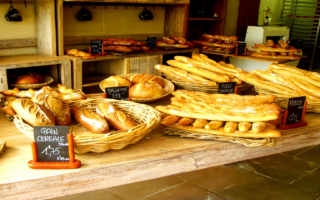
Integration is about being part of the community on a local level and not the integration contract proposed by the government. It is about being established, accepted and welcomed in your local community; about whether or not you are welcomed at the boulangerie as a regular customer or just a holidaying foreigner. Perhaps it’s when people stop asking you for English lessons and start asking you into their homes.
Perhaps the greatest key to integration is your willingness to participate in local life. In an association, a mutual interest can transcend language problems. Even if your French isn’t perfect, making the effort to integrate is worth the hard work. If you want to live among the French and to count them not just as neighbours but as friends, then joining an association might help you to break down barriers. If nothing else, you could find yourself, like Jennifer, addicted to a new hobby and welcomed into a warm group of like-minded companions.