






It’s so easy to fall for the French way of life, the dream home and the fantasy of a new start. But it’s not all sunshine and roses. Many ex-pats need to earn a living to sustain the lifestyle and with jobs pretty thin on the ground for locals and Brits alike, many choose to run their own company. But setting up a business in France is not as straightforward as in the UK and can be a potential minefield.
‘The best bit of advice I could give is to budget for about four/five years with insufficient or no income, advises Suzie Larcombe, a 40-something Scottish independent financial adviser who made the move to France four years ago after 20 years in the business.
Tired of the nine-to-five rat race in Edinburgh and having reached a crossroads in their lives, Suzie and her husband Adrian, a former business development manager in BAe systems, moved lock stock and barrel to Gers in southwest France, with their twins Anna and Georgia, then three, to set up a business and live their dream.
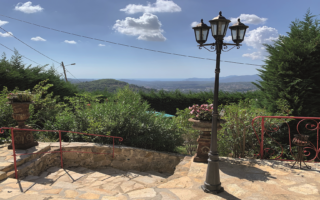
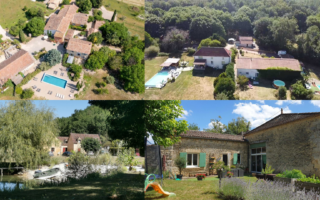
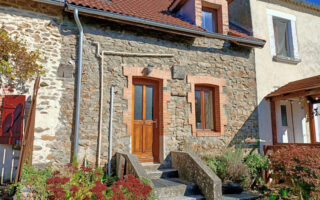
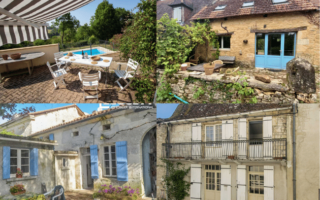
‘We did the usual “Brits buying a house in France bit” and looked at stonking great houses set in splendid isolation with swimming pools and stunning views of the Pyrenees. But we soon rejected this as a false way of life for us, and opted instead for a prominent village house in Riscle [near Aire sur L’Adour, about 40 mins northeast of Pau] which had been empty and untouched for decades,’ recalls Suzie who quickly realised they had found a little gem which the locals didn’t want because it was too big, and had been thought unsuitable for les Anglais, by the estate agents.
‘The house grabbed our attention immediately. It’s a maison de maitre with all the grand features that suggests: high ceilings, gorgeous fireplaces and proportions to die for,’ adds Suzie. She and Adrian snapped it up and went on to transform it to its former glory inside and out. The grande maison is now for sale as the Larcombes have bought another property to do up, just around the corner from their current home.
This all sounds like a happy ever after story, but it has not all been plain sailing. ‘French bureaucracy is immense and to us Brits, largely illogical,’ says Suzie, who found her financial expertise and business acumen helped her wade through the complexities of schooling for their daughters; tax affairs; medical and insurance cover as well as all the red tape around setting up a business in France.
Language issues
It’s tough for older foreigners looking for a career change in France, acknowledges Adrian: ‘Day to day life here is a challenge. There are the language issues, which, from time to time, pose problems for even the most competent French speaker. There are of course the cultural differences which, while not a daily issue, are something that honestly can’t be ignored; and finally the importance of becoming a truly integrated member of the community. All in all, life here is great, but the difficulties should not be underestimated.’
The Larcombes have tackled these problems head on. They have both learned the language – Adrian enough to get by; Suzie to a standard which enables her to help out other British people whose French is not so good. They have integrated fully into their new community, have many French friends and their children, now aged seven, are settled, happy, bilingual and doing well at the village school.
To finance this new life in France the couple capitalised on the skills they had acquired during their careers and set up a company – LimeGray – which generates income from both sales and services. On the sales side, they have trawled the UK and France, and sell a variety of products including Scottish cashmere and French porcelain in local markets and over the internet. On the services side, they offer business workshops; create websites; source promotional material and devise marketing strategies as well as providing 3D floor plans for people renovating French homes. Everything they’ve done has had to have low overheads and be manageable from home.
The workshops, called ‘twelve ways to get more customers for your business’, are held locally and currently offered for free. They have proved extremely popular and have provided a great platform for the Larcombes’ business as well as giving local British business people a chance to network. The free workshops have created so much local demand that the Larcombes are looking at widening their audience, either through teleconferencing or local radio stations. They have also linked up with a local linguistics company and are offering the workshops to French small business owners.
‘The response has been mega. The workshops have generated huge interest and allowed us to meet a wide variety of people from all sorts of businesses,’ says Adrian. ‘We offer clients ways to get more customers without advertising. Although advertising is clearly really important, there are lots of additional ways to promote your business. We share marketing ideas that people can test for themselves before choosing the ones that work – the ones that get the most new clients without ploughing fortunes into advertising. We may even consider running them on a conference call set up to broaden the appeal for Brits wanting to prepare themselves for running a French business before leaving the UK.’
Suzie’s advice to anyone setting up a business in France is to expect the unexpected and make sure you have a really sound idea (and sound advice) before jumping into the unknown. ‘We have met lots of Brits who start a business to give them the elusive income they are lacking, only to find themselves driven into deeper financial gloom. You must go into business here knowing what the commitments are, because in the first year in particular the social costs can drive down even the most motivated small business person.
‘We were discouraged by the French authorities from having a dual-registered business because of the complexities involved. However, we both agree that if you have a really good service idea, there’s no better place to promote it than in the good old fashioned French marketplace.
‘But to be able to do this, you need have something to sell, therefore you need dual registration. It’s a bit of a catch-22. The bottom line is get good advice (bilingual if necessary) before you start and you won’t go too far wrong.
‘While books and the internet are great starting points, we’ve found that, by the time information gets to print, it’s quite often out of date. Life in France is dynamic and ever-changing. For example, during the late stages of launching our business in France, we discovered that a recent change in legislation meant that our company will be exempt from income tax for five years and then pay on a sliding scale to year 14! That’s life-changing information, but it’s not widely publicised and very few people know about it.’
Suzie advises people to check out possible tax exemption areas even before buying a home in France.
There are other ways to reduce your investment risk even further. ‘For example being registered unemployed for six months (no benefits are paid) allows you to apply for social security exoneration for your first year in business. It’s a huge, complicated application form and it’s not always granted, but it is well worth applying for. There are also tax exonerations in certain rural areas. Visit the local mairie before buying would be my advice. And pay for bilingual advice from a specialist in business set-ups; it will nearly always save you more than it costs.’
You also need to re-think your existing investments before taking the plunge in France. PEPs, ISAs or premium bonds are only tax efficient in the UK, and income and gains they generate for French residents will be taxed in France.
Despite the stark warnings, the Larcombe’s lifestyle is very different from their previous one. ‘You don’t have the pressure to achieve over here because you don’t need a lot of money to live on,’ says Suzie. ‘Consequently we have more time together as a family, we eat better and have time to spend at the beach in the summer and the mountains in the winter; both of which are just an hour away.’
Contact Suzie and Adrian Larcombe
www.limegray.com
www.madeingers.com
Top 10 tips for… real life in France
- Keep a hefty slush fund
- Know your skills and their value
- Know your income requirements
- Think outside the box
- Take appropriate risk
- Plan to have several income streams
- Package your product/service
- Know your target market
- Network
- Promote using at least 8 channels
Top 10 tips if you’re thinking about developing a website
- Know what you want the site to do for you
- Work with someone you get along with
- Don’t exclude using a remote website designer
- If it’s your first time, start small
- Make sure your 3 key benefits appear on page one
- Give visitors a reason to stay
- Address your visitors’ needs, don’t speak about yourself
- Choose good colour combinations
- Have your phone no/email address all over the site
- Make the content of your site clear