
Bookmark

Search

Interview with Patricia Atkinson

Patricia Atkinson’s story of moving to France and learning to make wine has inspired and delighted many people. She talks to Jan Cintas about her latest projects and her view of life in France today...

Click image to enlarge

Patricia Atkinson lives the good life in Dordogne


I ring for final directions when I am only a couple of kilometres from Patricia Atkinson’s house, only to be told that she has had a fall and is in the emergency department of Bergerac hospital with a suspected broken arm. I decide to come anyway, being so close.

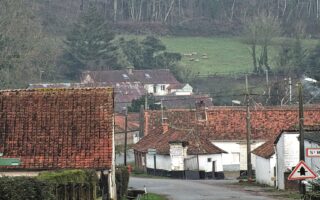
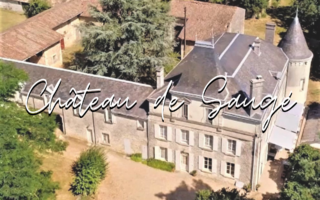
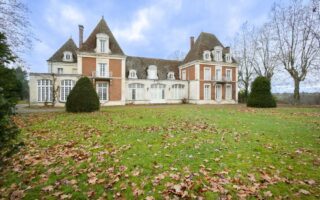
The village of Gageac is just as Patricia describes it in her two books, The Ripening Sun and La Belle Saison. Here is the stunning château; the simple Romanesque church next to her house; the horse Eida, in the field opposite; and finally the stone wall with Clos d’Yvigne inscribed in large red letters.

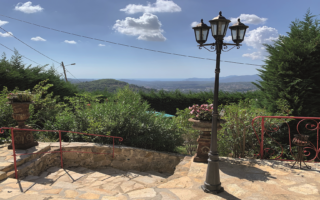
Here is the courtyard, filled with roses, wisteria and tamarisk, adjoining the house, and the tasting room and office where Patricia’s assistant Karen greets me. We take a tour of the working side of the property: a newly built storage depot, where palettes of labelled boxes are waiting to be shipped to the UK; the cellar, where the wine is ageing in rows of oak barrels; the chai, with its vats and freshly washed concrete floor glistening. We return to the tasting room, and suddenly here is Patricia Atkinson, a slightly frail figure in denim shorts and a pink shirt, both arms virtually out of action, one in a sling, mercifully not broken but with torn tendons.

Despite the difficult circumstances, she is still willing to give an interview, which says much about the kind of person she is. She leads a full life, with numerous trips abroad. I caught her between visits to the UK and the United States, but whenever possible she is happy to welcome the many people who beat a path to her door, to taste and buy her wines and ask her to sign copies of her books.

She invites me into her kitchen, a light airy room with French windows, a long table ideal for enjoying meals in company, and a cabinet of tall-stemmed glasses for the accompanying wines. Patricia launches into an explanation of how the accident happened: she had been walking early that morning with a friend when she slipped on gravel and fell into a ditch. The long walk was part of a training programme for the next book she is writing – walking to Conques,
in Aveyron.

Patricia tells the story of Ste-Foy, the early Christian child martyr, after whom the nearby town of Ste-Foy-la-Grande is named. Her bones were housed in a golden statue in Agen, and were later stolen by a monk from Conques, which subsequently became a centre of pilgrimage. Patricia plans to walk there with a number of friends:‘Each friend will tell a story, rather like Chaucer’s Canterbury Tales,’ she explains.

New experience

As well as this book, Patricia is writing a novel which is two-thirds finished, and which is a new experience for her, as her previous two books have been entirely autobiographical. It is obvious that she enjoys writing, and it would be reasonable to assume that she wrote her first book because she wanted to tell her remarkable story of learning to cope with life in France and make wine as a woman on her own.

But in this assumption I am quite wrong. She tells me:‘No, I wrote it because Random House contacted me and asked me if I’d like to. I had no intention of writing a book!’ Patricia had already been featured in Channel 4’s documentary A French Affair, which followed the fortunes of four families who had moved to France and which in turn led to her getting some good wine reviews in England.

As she tells it:‘One Friday evening my editor (and now great friend) was sitting on the Tube going home, and he opened the Evening Standard. In it was an article on me with a big picture of me on a red tractor, and the caption “Wine world falls for woman in red”. If you didn’t know better and you read that article, which was basically a hotchpotch of all the nice things that various wine writers had said about me, you’d think that Monsieur Mouton-Rothschild had better look out! My editor remembered me from those days, and he remembers thinking that I wouldn’t last five minutes, so he contacted me and asked me to write a book.’

What was her reaction? ‘First of all, I thought it was a joke! I left the letter for about two months, and when I eventually wrote back I said, neither you nor I know whether I can write, or whether I want to, or whether I’ve got the time – what are you suggesting? Are you offering me money? “Can I buy more barrels?”was what I said. He wrote back and said, “Vive les barriques!” and asked me to write a 12-page synopsis, which I thought very hard about. Although I hadn’t realised it, when I’d written that synopsis I’d sort of written a book.’

That book was The Ripening Sun – one woman and the creation of a vineyard, in which Patricia tells the story of her arrival in France in 1990 with her husband James, whose dream it was to own a property with vines and make wine. However, the first year’s harvest turned to vinegar, then James became ill and had to return to England, and Patricia found herself alone having to cope with the demands of tending a vineyard single-handed. From four hectares she subsequently expanded to 21, and succeeded not only in integrating into French life, but in making awardwinning
wines.

Tough times

Patricia freely admits that she fell into rather than chose both wine making and writing. But how much was luck, and how much was hard work? ‘I think to some extent, and it may sound like a cliché, but you make your own luck. If you like, I was quite open, and also I wasn’t a Brit swanning around my swimming pool and spending two months a year here; I was sitting on a tractor, desperate to make a living and not having the money to pay the electricity bill.And that challenges you.’

What are her feelings as she looks back to those early days, described so vividly in the first book? ‘I guess I would say that if I’ve succeeded, it’s thanks to all those people who helped me. I had nothing but kindness from French people – they have a great generosity of spirit. I am also so ashamed that I moved to France not speaking the language.To be serious, looking back, quite often good things came out of terrible things that happened. You’re in this nightmare of horror, but in a funny way you’re growing, and learning, and interacting.’

I asked how she felt about her identity now, particularly as we met at the time of the presidential elections.‘I felt very upset that I couldn’t vote, because I pay my taxes and I employ people.’What about French bureaucracy? ‘Oh la la! It’s still as hard as ever, except that I know a lot more people and I know how it works, but if you don’t know, it’s a catastrophe.’

Patricia cites the example of a form that she should have filled out and sent to Brussels, listing the quantity of wine that she sells in France, how much she exports, and how much is in barrels.‘It’s exactly the same figure as I send every month to the CIVRB (Conseil Interprofessionnel des Vins de la Région de Bergerac), except I didn’t know I was meant to send it to Brussels. So I was fined 750 euros.’ Even after 17 years in France, there are still bureaucratic pitfalls.

Patricia’s second book, La Belle Saison, is more of a celebration of French life, its food, wine and people, including her story of restoring two of her former neighbours’ properties as gîtes. It is obvious that her life is no longer the nightmare that it once was; she employs three people permanently – Karen to help her with administration and two men to do the hard work in the vineyard.‘I’m no longer sitting on tractors all day or pruning, thank God! I know how to do the physical work, but I don’t need to do it any longer. But I still make the wine,’ she tells me. She also buys in extra labour as needed for peak work periods, such as the vendange.

Good palate

Patricia is totally accepted in the wine world, to the point of being asked to judge at wine tastings.About a third of her wines sell in France, to local markets and to people who come to Clos d’Yvigne, and two-thirds go abroad, to England, Japan, Hong Kong and Switzerland.

She makes two whites, a classic dry and a barrelled white; a rosé; and two reds, both aged for two years in oak: le Petit Prince which is 90 per cent Merlot and 10 per cent Cabernet Franc, and the Rouge et Noir which is 75 per cent Merlot and 25 per cent Cabernet Sauvignon.We talk about the challenge posed by new world wines to the UK market, and how Patricia learned to taste wine which, although very intimidating, brought with it the realisation that she
had a good palate; something one is born with, just like an ear for music, in her opinion.

‘What I would like to say about wine is that there is so much snobbism attached to it, but really, if you put your nose in a glass and it smells nice, it’s probably going to taste nice.And if it tastes nice, then it’s a nice glass of wine for you.You may not know why, but then if you’re not a wine maker why should you? Just enjoy it.’

So we do. I taste some of Patricia’s wines, along with an American family who have just turned up at Clos d’Yvigne,wanting a copy of The Ripening Sun signed.The wines are truly outstanding, the whites and rosé fresh and full of fruit, the reds rich and complex, and the sweet white out of this world. I cannot resist buying a few bottles; indeed it would be folly to pass up the opportunity.And finally, I leave Patricia to get some rest and take her painkillers.

Clos d’Yvigne, 24240 Gageac-et-Rouillac
Tel: 00 33(5) 53 22 94 40
www.cdywine.com


Back Subscribe here


France Forum

Be part of one of the original and largest France forums on the web. With over 6000 active members and 47 different sections on owning French property and French lifestyle, the Living France forum is the perfect place to share your views...Join today and get helpful advice and quick replies to your questions...
READ MORE »


New subscriber only offer!

New subscriber only offer! You can get Ripailles by Stephane Reynaud (rrp £25) for just £14.99...
READ MORE »


Ask the developer

To find out more about the new-build market, we ask a developer for the inside track on their patch. In this issue, we talk to Pat Leech, of Dordogne-based Avilion Sustainable Homes, which covers the whole of France...
READ MORE »