


Bookmark

Search

Christmas dinner - French style

Nicole Dussartre answers a reader’s query about what makes a French Christmas dinner...

Click image to enlarge

Nicole Dussartre is a cordon bleu trained chef running cookery holidays at Le Manoir de l’Aufragère in Normandy


Question: As my husband and I are both ardent Francophiles, we would like to make Christmas a French affair this year for us and our extended family. What is a typical French Christmas dinner? How many courses are there and what do the French traditionally drink? What other traditions are observed over the festive period?

Natalie Thomas, Edinburgh

Answer: If you were asked to describe a typical British Christmas dinner, you would undoubtedly say roast turkey with all the trimmings, Christmas pudding and stilton, with mince pies and Christmas cake thrown in somewhere for good measure. In France, however, it’s not so clear cut.

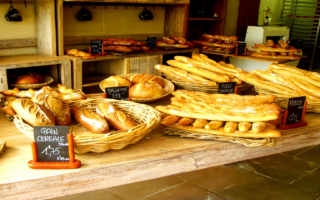
Firstly, the entertaining truly kicks off on Christmas Eve. The atmosphere during the day is wonderful; queues of excited people lining the pavements outside the boulangeries, patisseries and the like, collecting their orders for two days of festive feasting. There’s a big special dinner that night and many families still attend midnight mass before opening their presents. On Christmas Day, there’s another meal, which I’ve always felt is more subdued than the previous evening (perhaps due to sore heads?) and then it’s back to work on 26 December as Boxing Day isn’t celebrated in France.

I’ve spent many Christmases with French families and the one constant has been foie gras on sliced brioche and smoked salmon on blinis with champagne for the apéritif. Then there’s usually a cold and hot starter. The first starter could be fresh oysters, a pleasant seafood terrine or just some good quality smoked salmon. The oysters are traditionally served with rye bread and butter and lemon juice or shallot vinegar. Shallot vinegar is simply vinegar mixed with chopped shallots (I prefer using cider vinegar, as I find red/white wine vinegar too acidic). Sancerre and Muscadet Sur Lie are the obvious white wine choices, but we serve our oysters with a Pinot Gris from Alsace which is slightly fruity, not so dry and really compliments the flavour of the oysters.

The second starter is often coquilles St Jacques grilled or baked, served in their shells with a delicious creamy sauce. To ring a change, I serve them with a chestnut and smoked lardon sauce. With this course, you could continue with the Pinot Gris or, as the coquilles St Jacques are beautifully sweet, a white Burgundy such as a Rully, St Veran or a Viré-Clessé. If you’re looking for a more reasonably priced wine, try a Montravel from the southwest or a there are a couple of very good Vin de Pays d’Oc, Mas Meyrac and the Chardonnay from Château Pennautier.

It’s difficult to pinpoint one dish for the main course as there are so many variations, depending on who you dine with. Some people opt for game – venison, wild board, pheasant, pigeon – while others prefer poultry, duck, goose or capon. A good roast fillet of beef or a roasted leg of lamb are also viable options even though they almost don’t feel special enough for such a prominent date in the calendar. Compared to the British Christmas dinner, vegetables are relatively thin on the ground at the French table; instead, you might find chestnuts, wild mushrooms, haricots verts (surprisingly, usually tinned), gratin dauphinois or a delicious purée of potatoes and celeriac. The wine is red and people usually splash out, but it is down to personal taste and depends on what you’ve chosen to eat.

Cheese is, of course, an important part of any French Christmas celebration. It’s usually served between the main and dessert, with Mont D’Or (Vacherin) and Roquefort being common choices. In fact, Mont D’Or is only available from late autumn to late spring and so is popular during the festive season. Sometimes served with the cheese course, or occasionally before, is a salad, very often consisting of dandelion leaves (pissenlit) or lambs lettuce (mache).

The dessert is a rather predictable bûche de Noël. I personally am not keen as I find it too rich and sweet for the end of such a big meal (it’s like a swiss roll filled and covered with butter icing, decorated with various Christmas figurines). There’s a frozen version of the bûche de Noël which you will often see on display in freezer cabinets in patisseries. I find a lighter version is the good old chocolate roulade or, for something warm, try spicy poached pears in cider. Champagne usually bubbles up again with dessert but if you fancy something different, you could try a Banyuls (a red vin doux naturel from the Côtes du Roussillon) if serving a chocolate pudding, or a glass of pommeau from Normandy with a pear/apple dessert.

The French don’t have Christmas crackers but do have little sweets called papillotes which are sometimes scattered on the table.

You may also consider having a galette des Rois – this is a cake that traditionally celebrates Epiphany but is available from the beginning of December until the end of January. It’s a circle of puff pastry (or brioche in the south of France) filled with frangipane with a figurine placed inside known as the fève (meaning bean, because that’s originally what was used). When you buy one it will be sold to you with a crown. The tradition is to divide the galette into equal parts according to how many people are at the table, then the youngest guest disappears under the table and calls out the names of all the other guests – as their name is called, that person is served their slice of galette. Whoever finds the fève takes the crown and makes someone at the table their king or queen.

The other food I’ve noticed around Christmas is boudin blanc. When I spent my first Christmas with my husband Régis’ family we went to the market on Christmas Eve where I saw these pale, insipid looking plump white frankfurter-style sausages which I discovered we were having for lunch. I wasn’t exactly excited about lunch that day, but they were delicious, baked in the oven on a bed of apples with a potato purée. They’re actually poached chicken/veal/pork mousseline sometimes seasoned with cèpes, port or truffles and, even though they don’t look all that appetising, they’re very good indeed!

Three-night cookery holidays at Le Manoir de l’Aufragère cost €600 (£419) (inclusive of cookery course, accommodation, meals and drinks). For further information, visit www.laufragere.com or call (00 33) 2 32 56 91 92


Back Subscribe here


Only a four day week for most schools

Earlier this week schoolchildren returned to classes but not all was gloom for primary and junior secondary children as the tradition of Saturday morning classes has been scrapped...
READ MORE »


Forum Code of Conduct


READ MORE »


Avoid delays - Go by train to France

Avoid the headaches of checking in, passport control, bag scanning and everything else that goes along with catching a flight, and take the when travelling shorter distances...
READ MORE »


Air Share scheme perfect for overseas property

An affordable executive aircraft ownership scheme in the UK will banish the tedious prospect of air travel on commercial airlines. This is great news for those who own overseas properties in Europe...
READ MORE »


Living in France Blog - Life in rural France

Blog about life in rural France.. both the ups and the downs!
READ MORE »